纳米囊泡介导的新型基因治疗载体及体内基因递送
我们课题组另外一项工作关注了新型基因治疗载体的开发与应用。EV作为药物递送载体具有低免疫原性、易被细胞摄取、可多样化工程修饰等优势,其在递送化疗药物、治疗性miRNA及蛋白质以改善疾病进程方面的研究已被广泛报道。基因治疗旨在通过向目标组织或细胞引入设计的外源核酸序列,以补偿或纠正基因缺陷,从而达到治疗目的。
目前较成熟的基因递送载体为工程化腺相关病毒(recombinant Adeno associated virus, rAAV),但仍存在组织靶向性不足、细胞摄取与表达效率偏低、易被中和抗体抑制等问题。我们的工作创新性地采用EV装载rAAV (EV-AAV) 的策略,显著提高了其进入细胞及表达蛋白的效率,尤其改善了抗体中和问题。为验证EV-AAV的治疗效果,我们在缺血性心肌损伤、肝细胞瘤及皮肤损伤再生等动物模型中证实,其改善疾病进程的能力优于传统rAAV载体。
近期,我们利用微流控和精确孔径挤压等技术,开发出装载AAV的人工纳米囊泡 (CME-AAV)。相较于EV-AAV,新型载体不仅大幅提高了制备效率和回收产率,还在杜氏肌营养不良 (DMD) 疾病模型中展现出更好的治疗效果 (unpublished data) 。我们的工作为基因治疗临床应用提供了一种全新的递送策略,可能解决目前载体抗体中和及组织靶向性低等问题。
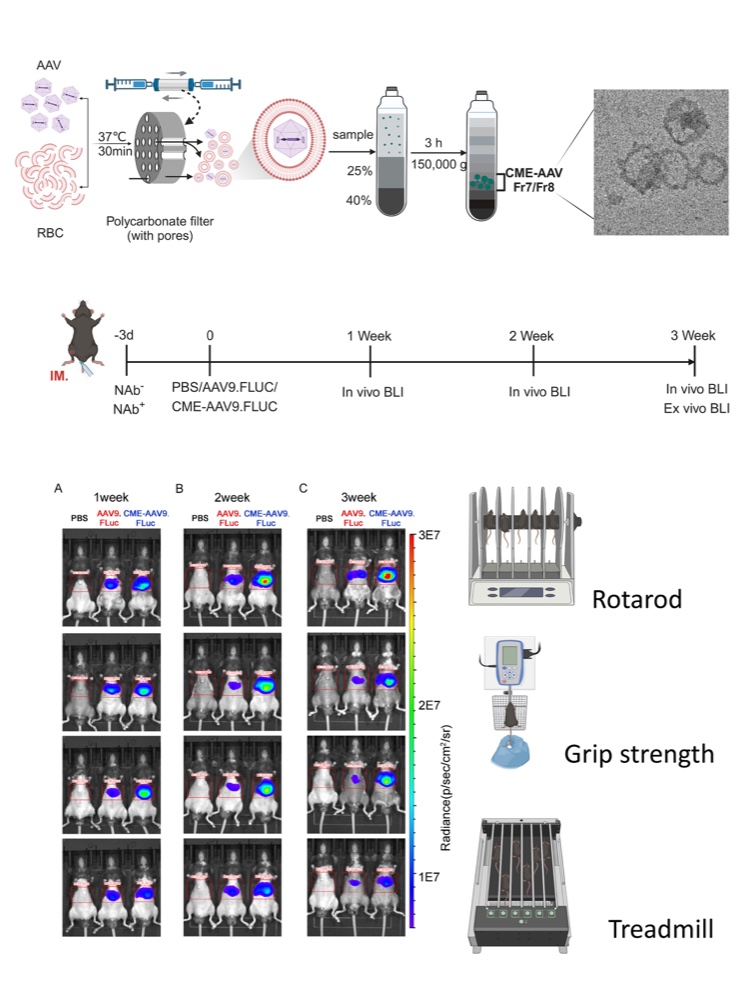
Nanovesicle-mediated gene delivery and therapeutic applications
The project focused on developing next-generation gene delivery vectors. Leveraging the natural biocompatibility and cellular uptake efficiency of EVs, we design EV-based and synthetic nanovesicle systems for therapeutic nucleic acid delivery. We have engineered a membrane-enveloped AAV nanovesicle (EV-AAV) that markedly enhances cellular entry, transgene expression, and resistance to antibody neutralization compared to conventional recombinant AAV (rAAV). In animal models of ischemic myocardial injury, hepatocellular carcinoma, and skin wound regeneration, EV-AAV demonstrated superior therapeutic outcomes. Building on this concept, we have recently developed artificial nanovesicles loaded with AAV (CME-AAV) using microfluidic and extrusion-based techniques, achieving higher production efficiency and improved therapeutic efficacy in a Duchenne muscular dystrophy model. This line of research seeks to provide innovative delivery strategies for clinical gene therapy, addressing long-standing challenges in vector targeting and immune compatibility.